On June 15, 2025, major parts of Colorado Springs experienced a severe hailstorm that produced hail averaging around 1.75 inches in many affected areas.
That is golf-ball-sized hail.
Storms of that size are capable of causing serious functional roof damage, including bruising, granule loss, fractured shingles, damaged vents, compromised flashing, and soft-metal impacts throughout a property.
The problem is that many homeowners never notice the damage.
Why Homeowners Often Miss Hail Damage
Roof damage does not always create immediate leaks.
In fact, some of the most serious hail damage can sit unnoticed for months while the roof slowly deteriorates underneath the surface.
Many homeowners assume that if there is no active leak, there is no damage.
That is not always true.
A roof can experience functional damage that shortens its lifespan long before water ever enters the home.
Why June 2026 Matters
Many insurance policies have time limitations regarding storm-related claims.
Depending on the insurance company and policy language, some homeowners may have approximately one year from the storm date to file or begin the claims process for hail damage.
That means once June 16, 2026 arrives, some homeowners could lose eligibility for certain coverages related to the June 15, 2025 storm.
Every insurance policy is different.
Homeowners should always review their own policy terms or speak directly with their insurance provider to verify deadlines, limitations, deductibles, and claim requirements.

Why Waiting Can Become Expensive
Even if a roof is currently not leaking, untreated hail damage can continue worsening over time due to:
- UV exposure
- Thermal expansion and contraction
- Wind-driven rain
- Granule loss
- Freeze-thaw cycles
- Additional storms
What may have started as moderate hail damage in 2025 can eventually become a much larger and more expensive roofing problem.
Why Documentation Matters

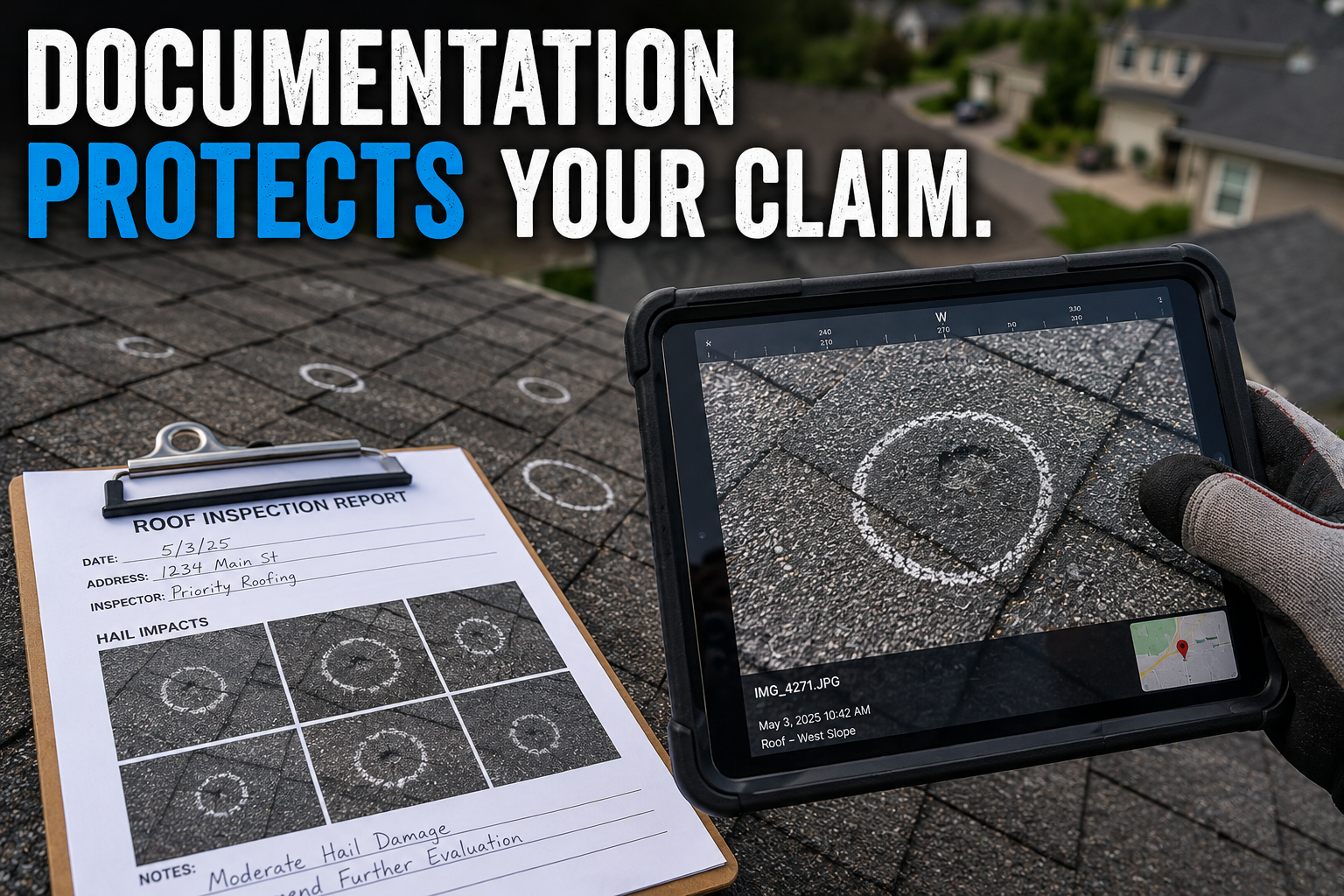
One of the most important parts of a storm inspection is documentation.
At Priority Roofing, inspections include:
- Hail-hit density evaluation
- 10-by-10 test squares
- Soft-metal inspection
- Ventilation checks
- Granule-loss analysis
- Full photo documentation
This helps homeowners better understand the current condition of their roof and provides documentation that may be useful during the insurance process.
What Size Hail Hit Colorado Springs?
The June 15, 2025 storm reportedly produced hail averaging around 1.75 inches in portions of Colorado Springs.
For comparison:
- 1-inch hail is approximately quarter-sized
- 1.75-inch hail is approximately golf-ball-sized
- Hail of this size is commonly associated with functional roof damage in Colorado storms
Why Many Homeowners Are Choosing Class 4 Shingles
After major storms, many homeowners choose to upgrade to Class 4 impact-resistant shingles during replacement.
Class 4 shingles are designed to better withstand repeated hail impacts and may provide:
- Better long-term durability
- Improved granule retention
- Better resistance to future storms
- Longer roof lifespan
- Potential insurance discounts through some providers
Many homeowners find that insurance discounts can offset a significant portion of the upgrade cost over time.
The Bottom Line
If your home was in the June 15, 2025 Colorado Springs hail path and your roof has not been professionally inspected yet, now may be the time to do it.
Waiting too long could potentially affect insurance options depending on your policy and provider.
A professional inspection can help identify damage early, document roof condition, and help homeowners make informed decisions before future storms arrive.
Schedule your free roof inspection with Priority Roofing before another Colorado hail season arrives.


Leave a Reply